
Our Team
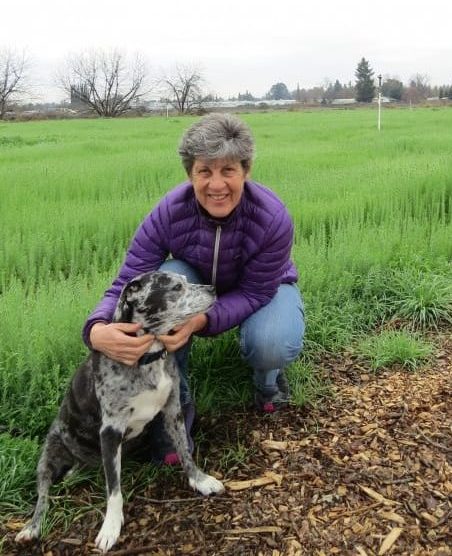
Sandy Fisher
Sandy Fisher is one half of the co-founding team behind Golden State Linen. A firm believer in regenerative agriculture and processing systems, she is always looking for new ways to collaborate with local community members, farmers, artisans, and institutions to foster a community around local fiber. Sandy is also a master weaver who has exhibited in craft shows and exhibitions across the country, including the Smithsonian Museum in Washington, D.C.
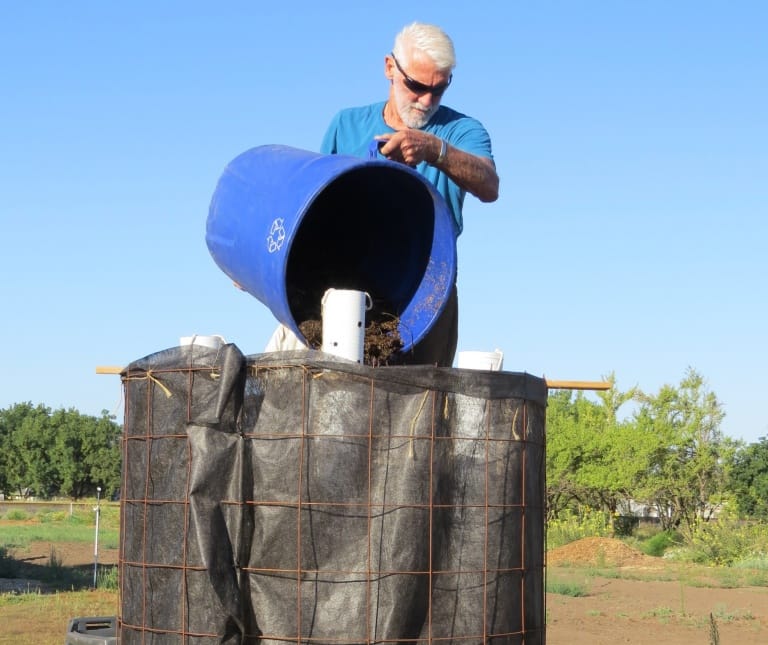
Durl Van Alstyne
Durl Van Alstyne is the second half of the co-founding team behind Golden State Linen. He was raised in and around Sebastopol and Santa Rosa areas of Sonoma county, graduating from Santa Rosa High. He pursued a college degree starting at Santa Rosa Community College, obtaining a BA degree in 1971, from CSU, Chico and a standard secondary teaching credential in 1972. Ending more than 30 years of teaching with the Butte County Office of Education, his encore career continues with Golden State Linen.
Our Story
How We Came To Be,
from Sandy Fisher
My journey in textiles began in 1980 in Turriff, Scotland, as a student at David Gurney Weavers. There I learned traditional weaving techniques and finishing practices on hand looms. As I perfected my craft, I added my own contemporary artistic styling. I learned during those years that I especially liked working with linen. Although a mention of weaving in Scotland commonly evokes images of sheep and wool, the growing of flax and its processing into linen has a long and significant history in Scotland.
Back in America, people I knew were very critical of the industrial-scale, synthetic textile industry. As a traditional weaver, I was often asked how local hand weavers could provide an alternative to mass-produced textiles. It was a challenging question. To meet all the requirements, alternative textile production would have to use only locally produced wool, alpaca, cotton, and flax, and the fibers would have to be grown and processed using sustainable practices.
Of these four fibers, linen was the one most difficult to imagine being produced locally. There were no linen mills in America and no flax farmers! My husband and I wondered if we could grow flax ourselves and make our own linen. We began researching the process and decided we could do it. We had to learn the various stages of flax processing—retting, scutching, and hackling—from what we could find online and in books. Over the course of twelve years, we proved that flax will grow quite well as a winter crop here in Northern California and that it is possible to process flax into quality linen using traditional processes.
In 2018, land that had once been an almond orchard became available to us. We started a sustainable working farm where we grow flax and process it into linen fibers. We began as Chico Flax, and have recently re-organized into Golden State Linen. I now think of myself as a weaver turned farmer.
We are the only small-scale flax processing business in the United States. Our flax grows in healthy, carbon-capturing soil. We have been recognized as mentor farmers in the Regenerative Farmers Program at CSU Chico. Students from the Engineering Department at CSU Chico have helped us to mechanize the steps of turning flax into linen by creating inventive processing tools.
We are a socially responsible enterprise integrated into our community. We offer workshops and organize work parties in which groups of people come on our land to harvest and process flax. The people who want to learn about flax farming and linen production come from all walks of life. There are people interested in exploring aspects of their European heritage, farmers who want to try new crops, environmentalists who want to support a local textile economy, artisans who love to spin and weave, and university professors teaching the value of art and handwork.
My product line uses the entire flax plant. I sell long-line linen for spinning into linen yarns, fibrous straw (tow) for papermaking and as a substitute for petroleum-based products, and linen-blended yarns for knitting and weaving. I created the first commercially available, locally sourced, made-in-America linen/wool yarn and began selling it in 2020.
I see Golden State Linen as a role model for folks who want to start other small-scale flax processing mills. I am encouraging other farmers to grow fiber flax for linen processing.
At Golden State Linen itself, I hope to design more mechanical processing tools with the help of the CSU Chico Engineering department and others. I want to purchase a flax harvester from Europe and begin to spin pure linen yarns, all as part of my effort to provide locally sourced, made-in-America, high quality linen yarns and fabrics for a global market.
– Sandy Fisher